The safe answer to how to change garage door roller depends on where the roller sits. An upper roller may suit careful DIY work when the door is stable. Bottom rollers, springs, cables, hinges, and off-track doors can cause serious injury. Clovis Garage Door Repair can check the full door before parts are changed.
Table of Contents
- How do you know when a garage door roller needs changing?
- What causes garage door rollers to wear out?
- Can you change a garage door roller yourself?
- How do you change a garage door roller safely?
- What is the difference between nylon and steel garage door rollers?
- What should you check when a garage door roller comes off the track?
- When should you call a garage door repair professional?
How do you know when a garage door roller needs changing?
A garage door roller may need changing when the door rattles, grinds, sticks, or moves unevenly. Look for cracks, flat spots, loose bearings, or a bent stem. The door may still work, but continued use can strain the track, hinges, opener, and cables.
Sounds and movement that point to worn rollers
A good roller moves through the track with little noise. A worn roller may squeak, rattle, grind, or pop at one point during travel. Several worn rollers can make the whole door sound rough.
Watch the door as it opens and closes. It should move in a steady way. A door that jerks, leans, pauses, or shakes may have roller trouble. Yet the track may also be dirty, bent, loose, or out of line. A roller is not always the only cause.
Look at each visible roller without touching springs or cables. A nylon wheel may split or wear along its edge. A steel wheel may rust or have a rough bearing. A stem at an odd angle may point to a damaged hinge or track.
How roller problems affect the door system
Rollers guide each door section as it travels. When one roller drags, other parts carry more load. This can strain the hinges, track fasteners, lift cables, and opener.
A noisy door is not always an emergency. A door that is crooked, partly open, or off its track needs more care. Stop using it until the cause is clear. Clovis Garage Door Repair can help homeowners check whether the trouble is a roller, hinge, track, or another part.
What causes garage door rollers to wear out?
Garage door rollers wear from repeated movement, dirt, moisture, poor alignment, and nearby damage. Finding the cause matters because a new wheel will not fix a bent track or broken hinge. A full check can help prevent the same problem from returning.
Age, dirt, moisture, and poor alignment
Every opening cycle moves the rollers along the track. Wheels and bearings can wear down over time. Dirt inside the track adds drag. Water can rust steel parts and harm some bearing surfaces.
The track does not need heavy grease. Grease can trap dust and form a rough paste. A homeowner can wipe away loose dirt from the track area. Keep hands away from moving parts.
Poor alignment is another common cause. A loose bracket, bent track, or shifted fastener can make a roller rub. A door may also move badly after a vehicle, tool, or stored item hits it. These problems need more than a new wheel.
How hinges, tracks, and door weight contribute
Hinges join the door sections and let them bend during travel. A cracked hinge can hold a roller at the wrong angle. This can cause uneven wear and make the door bind.
Door weight also matters. Solid, insulated, and commercial doors may use different roller sizes and hardware. The replacement must match the door design, stem length, wheel size, and track setup. A part that looks close may not fit or carry the load safely.
Garage Door Maintenance can help find loose hardware, dirty tracks, damaged hinges, and poor movement early. A homeowner should not tighten hardware near springs or lift cables without proper training. Those parts can hold dangerous force.
Can you change a garage door roller yourself?
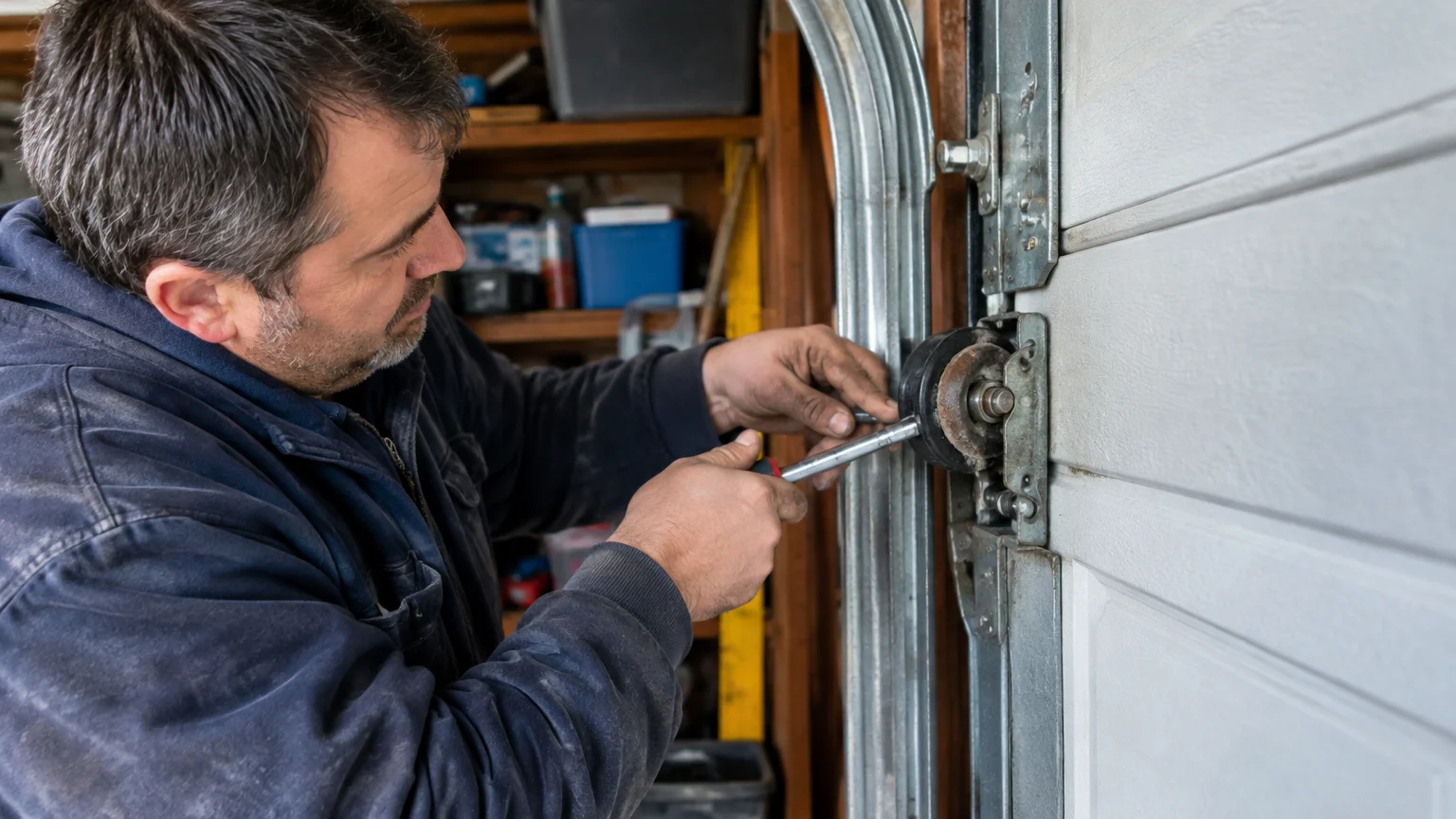
A careful homeowner may replace an accessible upper roller when the door is stable. The work must stay away from springs, cables, and bottom brackets. The roller’s location matters more than how simple the part looks.
Which roller replacements may suit careful DIY work
An upper roller may be easier to reach when the door is fully closed and stable. First, make sure the new part matches the old one. The wheel, stem, bearing, and hinge opening must fit the door.
Safe checks include watching the door move, clearing the track area, wiping loose dirt, and looking for visible cracks. The owner can also read the door and opener manuals. These steps help find a problem without touching tensioned parts.
A person should stop if the door is heavy, crooked, loose, stuck, or hard to control. Do not ask someone to hold the door as a substitute for proper support. Improvised support can fail without warning.
Why removing rollers from the bottom section can be dangerous
Bottom rollers connect near the bottom brackets. These brackets may sit close to lift cables and spring force. A lift cable under tension can move sharply if a bracket shifts. This can badly injure the hands, arms, or face.
A garage door spring stores energy. It may be tightly wound or stretched to help lift the door. Spring work needs the right tools, training, and plan. It is not a normal household job.
The same warning applies to a garage door hinge broken near the bottom section. The hinge may carry more load than it seems to carry. A trained worker can secure the door and replace the part without guessing.
How do you change a garage door roller safely?
The safe way to change garage door roller starts with the roller’s location and the door’s condition. It does not include releasing springs, removing bottom brackets, loosening lift cables, or forcing an off-track door. If any of these parts are involved, stop the work.
Tools, preparation, and door-position checks
Before safe upper-roller work, read the maker’s instructions and compare the new part. Basic hand tools may be needed, but the right tool depends on the hinge and fastener. Eye protection and gloves can help with dirt and sharp edges.
Clear the work area. Keep people, pets, and vehicles away from the door. Disconnect the opener as directed by its manual when needed. The door must stay in a stable position. A door that will not stay stable is not ready for DIY work.
Do not work near a spring, cable, bottom bracket, or loose track. Do not bend the track to force a roller into place. Do not remove fasteners that may support the door’s weight.
General replacement steps for accessible rollers
For an accessible roller that is confirmed safe, the general process is simple in concept. It still needs care:
- Identify the matching part. Compare the wheel, stem, bearing, and hinge opening.
- Secure the work area. Keep the door stable and people away from moving sections.
- Remove only the approved fastener. Avoid hardware near springs, cables, and bottom brackets.
- Guide out the old roller. Never force a wheel past a bent track or damaged hinge.
- Fit the new roller. Make sure it sits correctly in the track and hinge.
- Test movement carefully. Stop if the door binds, leans, scrapes, or makes a new sound.
These steps are general guidance, not a spring or cable repair method. A failed test means the door needs a professional check. Garage Door Off Track Repair is safer when the roller will not sit correctly or the track has moved.
What is the difference between nylon and steel garage door rollers?
Nylon rollers usually make less noise and do not rust like steel wheels. Steel rollers can suit demanding use, but they may transmit more sound. They also need checks for rust and bearing wear. The best choice depends on the door, track, use, and correct fit.
Noise, durability, and maintenance requirements
Nylon rollers are often chosen for homes because they can make travel quieter. Some use sealed bearings, which may need less care. They can still crack, wear, or lose shape when the door is heavy or nearby hardware is damaged.
Steel rollers are strong and common on doors with frequent use. They may work well when the track is straight and the bearings are sound. Rust, dry bearings, and rough edges can make them noisy and add drag.
Neither material can fix a bad track or broken hinge. A new roller may wear quickly when the door is out of line. Choose a wheel that matches the full door system, not just the material.
How to choose rollers for a home or business
A home garage may need quiet movement. A business or rental property with frequent use may need a stronger roller and a careful service plan. Door weight, use, weather, and track condition all matter.
A technician can check the full roller set instead of changing only the loudest wheel. Matching rollers may help the door move more evenly. If the opener struggles, the problem may also involve balance, hinges, springs, or track resistance.
Garage Door Opener Repair may be needed when the opener clicks, stops, reverses, or cannot lift a door that moves well by hand. Opener and roller trouble can happen together, so both systems should be checked.
What should you check when a garage door roller comes off the track?
When a garage door roller comes off the track, stop using the door and keep people clear. The cause may be a bent track, loose hinge, broken roller stem, damaged cable, or impact. Forcing the door can make the damage worse and may cause it to fall.
Common reasons a roller leaves the track
A roller may leave the track after an impact or when a track bracket becomes loose. A worn hinge can change the roller angle. A broken cable can let one side drop. A damaged roller may also break or slip from its hinge.
Look from a safe distance. Note if the door leans, a cable hangs loose, or the track has a sharp bend. Do not push the door up or pull it down. Do not place fingers between door sections.
The track should guide the rollers without pinching them. Do not bend it by hand. A loose track may also be under load, so avoid removing its bolts without proper support.
When an off-track door needs professional repair
An off-track door needs professional help when it is heavy, crooked, stuck, partly open, or connected to a loose cable. The same is true when a spring, bottom bracket, hinge, or track support looks damaged. These parts can shift as soon as the door moves.
Garage Door Cable Repair may be needed when a cable slips or breaks. Garage Door Off Track Repair may be needed when the rollers and track no longer line up. A trained technician can secure the door before correcting the cause.
Clovis Garage Door Repair can assess a door that will not close, will not open, or leaves a vehicle trapped inside. Until help arrives, keep the area clear and avoid testing the opener. A powered opener can pull against a damaged door and create more damage.
When should you call a garage door repair professional?
Call a professional when a roller problem involves springs, cables, bottom brackets, heavy door sections, bent tracks, or an off-track door. Prompt help can restore safe access and protect a home or business from an unsecured opening.
Warning signs that make DIY replacement unsafe
These signs mean the door should not be repaired by trial and error:
- A lift cable is loose, broken, or wrapped unevenly.
- A spring is broken, stretched, separated, or visibly damaged.
- The bottom bracket or lower hinge is cracked or loose.
- The door is crooked, stuck, or partly off the track.
- A track is bent, pulled from its support, or badly rusted.
- The opener strains, reverses, or runs while the door cannot move.
A professional can help when the right roller is hard to identify. Replacing a matching set may be better than fitting one different wheel. The repair plan depends on the door design and the damage found during the check.
How prompt roller and track repair protects access and security
A working garage door helps protect vehicles, tools, stored items, and entry points. A door that stays open or will not lock can leave a property exposed. Waiting can turn a small roller issue into track, hinge, cable, or opener damage.
For a property owner, quick action can limit trouble for tenants and workers. For a homeowner, it can restore entry without unsafe lifting or forcing. Clovis Garage Door Repair serves the main Clovis area, including Stonebrook, Downtown Clovis, Texico, Farwell, and nearby communities. The team can explain whether the next step is roller replacement, Garage Door Maintenance, or urgent repair.
Key takeaways
- Worn rollers can cause noise, rough movement, cracks, and uneven travel.
- Nylon is often quieter, while steel may suit demanding use.
- Bottom rollers, springs, cables, and brackets are not safe DIY work.
- An off-track door should stay still until its cause is checked.
- A full inspection can protect the track, opener, hinges, and door.
Frequently Asked Questions
Can a homeowner change a garage door roller?
A homeowner may replace an accessible upper roller when the door is stable. The work must stay away from springs, cables, and bottom brackets. Bottom rollers and damaged hinges need professional care. If the door is crooked, heavy, stuck, or off track, stop and arrange a check.
How often should garage door rollers be replaced?
There is no single schedule for every door. Rollers wear at different rates because of use, dirt, moisture, door weight, and track alignment. Check them when the door becomes noisy, jerky, or uneven. A technician can decide whether one roller or several need replacement.
Are nylon garage door rollers better than steel?
Nylon rollers are often quieter and may suit many homes. Steel rollers can work well on doors with frequent use or higher demands. Neither option is right for every system. The wheel must match the door, hinge, track, load, and bearing design.
What should someone do when a garage door roller comes off?
Stop using the door and keep people away from it. Do not push, pull, bend the track, or run the opener. A loose cable, damaged hinge, bent track, or heavy door can create a serious hazard. Professional Garage Door Off Track Repair can address the cause safely.
Does a noisy roller always need replacement?
No. Noise can come from dirt, a bent track, a loose hinge, dry bearings, or another damaged part. A roller may need replacement when it has cracks, flat spots, rust, rough bearings, or poor movement. Check the full door system before choosing a part.
Conclusion
Learning how to change garage door roller can help a homeowner understand warning signs, but it does not make every repair safe. Accessible rollers may suit careful work. Rollers near springs, cables, bottom brackets, or off-track sections need trained attention. Contact us today to arrange urgent help from Clovis Garage Door Repair.