Garage Door Off Track Repair in Clovis, NM
The door is first held steady, then guided back into straightened rail on healthy rollers, and whatever pushed it out is dealt with so the problem doesn't return.
A panel bowed where it snagged, a door tilted or wedged, or rollers hanging out of the rail all mean the door is off track. In the Clovis area or anywhere else, the advice is the same: stop using it and leave the opener off.
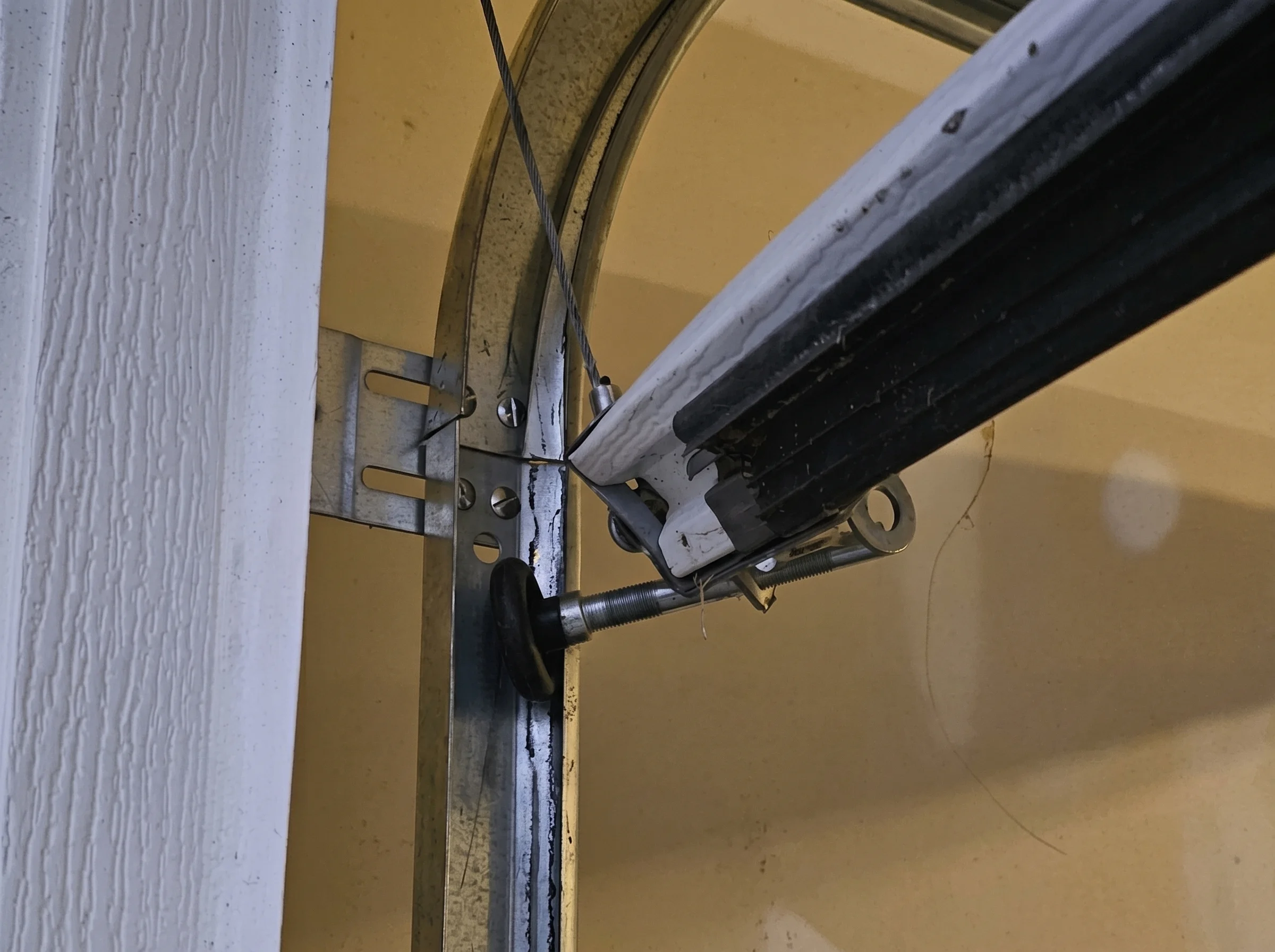
How to tell it's derailed
A roller hanging outside the rail, usually low on the door or at the curve where the track bends toward the ceiling, often on one side only.
The door is wedged or leaning, often partway up.
A bowed or creased panel, left where the opener kept shoving a jammed door.
Track that looks bent, dented, or pulled off the wall.
Scraping, popping or grinding noises right before the door came out.
Door out of the track? Don't use the opener. Tell us which side came out and what led to it.
Contact UsWhat knocks a door off track
A car strike
Backing a car into a shut or partly raised door is the commonest cause, and it usually bends the bottom of the track as well.
A cable that let go
That corner loses support and sags, twisting the door until rollers escape. A loose cable is covered on cable repair.
Tired or cracked rollers
When a bearing seizes, the roller drags rather than spins, then jumps the rail at the first uneven spot.
Slack or twisted track
Gusts above 30 mph are common around Clovis, and with years of vibration they loosen wall brackets until the track spreads and rollers slip.
An obstruction underneath
A bike, a trash can or a mower caught beneath a closing door, mostly when the opener's force is turned up high.
Secure the scene
Keep the opener off
It keeps pushing regardless, bending panels or tearing the track off the wall.
Don't pull the emergency release with the door partly open and out of its track; it can drop or swing away from the rail completely.
Don't try to pound rollers back in while the door's weight is on them. The spring still holds tension, and the door can shift abruptly.
Stand clear of the door, and tell us right away if a vehicle is shut inside.
How the repair goes
The door is locked in place so it can't fall or shift while the work is done, and any spring tension is dealt with first.
Damage gets sized up
Which rollers are out, how much track is hurt, what is bent, and whether a cable or spring began it.
Bent rail is fixed or replaced
Gentle bends can be straightened; torn or kinked track is replaced.
Damaged rollers are replaced, and every hinge is examined, because a cracked one can push a roller out a second time.
The door is lifted back onto its track, the brackets tightened, and a few full open-and-close cycles run on the opener. At the end, force and travel limits are checked once more.
Say what happened to the door
Share a line or two to begin with; there's no need to know what the failed part is called.
Roller types
How smooth and how quiet a door runs depends on its rollers, which give out long before the door itself does.
Basic steel rollers without bearings are noisy, and they wear down the track as well as themselves over the years.
Nylon rollers with sealed bearings are far quieter and need next to no lubrication.
Wobble, split wheels, flat spots or seized bearings say a roller is finished.
A door that is loud rather than broken often needs little more than new rollers, and that is normally done together with a maintenance visit.
What shapes off-track repair cost
How far the door has slipped
Two rollers out at one corner, or the whole door hanging loose.
Track condition
Straighten the track, or replace sections of it, on either side.
Rollers and hinges past saving.
Warped or cracked sections
Replacing a badly bowed section can mean hunting for a panel that matches an older door.
A cable or spring failure behind the slip.
When a panel is beyond repair
Sections that took a hard blow may be too bent to straighten. Often one section can be replaced while the rest of the door stays, provided a matching one is still available.
When no match exists, or several sections are hurt, garage door installation covers replacement options.
Quick answers
Is it OK to push the rollers back in myself?
When a single roller has slipped out at the bottom of a closed door, and the track is straight and no cable is slack, sometimes. Beyond that, stop: the door is heavy, under spring tension, and capable of moving suddenly.
Why does it always pop out on one side?
Most often the track on that side is slightly out of line, a bracket has loosened, or that cable needs adjusting. Hanging the door again without fixing that means it will come out again.
Do the tracks need lubricant?
No. Keep the rails clean and dry, because oil traps grit. With about 8.6 inches of snow a year in Clovis, dry off any damp.
Other garage door work
Garage Door Cable Repair
Frayed, snapped or loose cables, and the lopsided door that results.
Read more →Garage Door Spring Repair
Replacement springs, torsion or extension, chosen to suit what your particular door weighs.
Read more →Garage Door Installation
New doors for the opening you have: steel, wood, composite, glass or a mix, measured first.
Read more →Send a message
Say where the door stopped, which side came out, and what hit it.
A photo of each side helps. Look the contractor up with the New Mexico Regulation and Licensing Department; New Mexico requires workers' compensation coverage from its contractors.