A garage door opener universal remote can replace many lost, damaged, or extra handheld remotes. It cannot repair a broken opener, door, sensor, or spring. Compatibility depends on the opener brand, model, code system, and programming method. Checking these details first helps prevent wasted time and unsafe guesses.
A spare remote seems simple until it will not pair. A homeowner may buy a universal model, press a few buttons, and get no response. The cause may be a weak battery, an unsupported opener, or a door problem the remote cannot fix. Knowing the limits of the device makes the next step much clearer.
Table of Contents
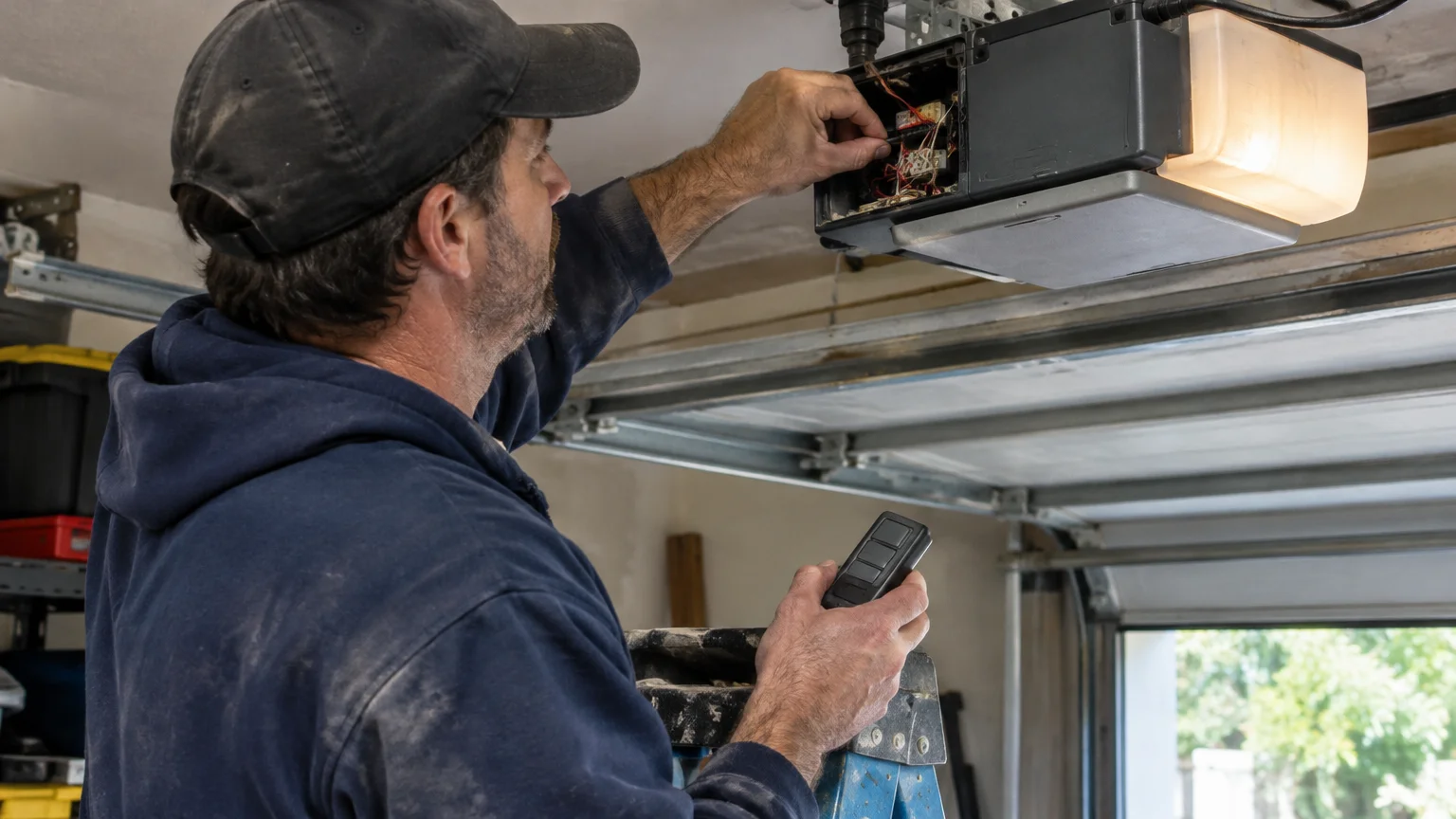
- What is a garage door opener universal remote?
- What can a universal remote replace?
- What can a universal remote not replace?
- How do you know if a universal remote is compatible?
- How do you program a universal garage door remote?
- What should you do when a universal remote does not work?
- When should you choose a universal remote or call a garage door professional?
- Key takeaways
- Frequently Asked Questions
- Conclusion
What is a garage door opener universal remote?
A garage door opener universal remote is a handheld control made for selected opener brands and systems. It sends a wireless signal to the garage door opener motor. When the signal matches the opener code, the door can open or close.
The word universal does not mean the remote works with every opener. Each product supports certain brands, models, frequencies, or code systems. The package and directions should list those limits in clear terms.
How universal remotes differ from original equipment remotes
An original equipment remote comes from the opener maker or is made for one opener family. It often supports that brand’s special features. A universal remote is made for wider use across several brands.
A universal model can help when the original remote is lost or no longer sold. It may also cost less than a brand-specific remote. The final cost of any professional service depends on the device, labor, access, and work needed. The cost is confirmed on a quote.
Universal remotes may have fewer buttons or special functions. A wall control, light button, vacation lock, or smart feature may not work through the universal device. The main open and close command is often the feature most likely to transfer.
Which garage door systems universal remotes can control
Many universal remotes work with common home opener brands. Some support more than one door, while others support only one opener. Compatibility may depend on the age of the opener and its security design.
Older systems may use fixed code switches. Newer systems often use rolling codes. A rolling code changes after each accepted signal. The universal remote must support the same system before pairing can work.
Clovis Garage Door Repair can help Clovis homeowners check whether a replacement remote fits the opener already installed. The right choice starts with the opener label, not only the shape of the old remote.
What can a universal remote replace?
A universal remote can replace many handheld controls used to open and close a garage door. It may replace a lost remote, a damaged remote, or an extra remote for another driver. It does not always replace every feature found on the original control.
Before buying one, check the opener brand and model. The remote support list should also match the code type. A remote that looks similar may still send a different signal.
Replacing a lost, damaged, or extra handheld remote
A universal remote is often useful when the original handheld remote is missing. It can also help when the case is cracked, the buttons are worn, or the device works only nearby.
A weak battery is a common cause of poor range. Replacing the battery may solve the problem without replacing the remote. Check the battery area for corrosion, loose contacts, or damage before buying another device.
A lost remote should be removed from the opener memory when possible. This helps stop another person from using it. The owner manual may explain how to erase old controls and pair the remotes that remain.
Using one remote for multiple garage doors
Some universal remotes can control more than one opener. Each button may pair with a separate door, such as a home door and a detached garage door. The remote must support the brands and code systems used by both openers.
Test each door from a safe place. The door should move smoothly, and the opener should stop or reverse when its safety system finds an obstruction. A remote cannot correct a door that binds, falls, or moves unevenly.
When one remote controls several doors, labels can prevent confusion. This helps in homes with attached garages, workshops, or rental spaces. Business owners should also plan for former workers and lost controls.
What can a universal remote not replace?
A universal remote cannot replace the opener motor, wall control, photo-eye sensors, wiring, springs, cables, or other mechanical parts. It sends a command, but it does not create the power or movement needed to lift the door.
This difference matters when a new remote does not work. The problem may not be the remote. A dead opener, blocked sensor, damaged circuit board, or broken spring needs a different response.
When a remote cannot overcome an incompatible opener
A universal remote cannot pair with an opener that uses an unsupported brand, frequency, or security system. Some older units have limited replacement choices. Some newer units need a specific remote family or compatible receiver.
The opener label and manual provide useful clues. The remote package may list supported model numbers. If the information is missing or unclear, a professional can identify the opener before another device is purchased.
A smart garage door opener adds another layer. It may use an app, wireless hub, or special network link. A handheld universal remote may operate the door while leaving smart features unavailable.
Why universal remotes do not fix opener or door problems
A remote cannot fix a door that is off its tracks or a motor that only hums. It cannot repair broken lift cables or a damaged wall button. It also cannot make a door safe when springs or brackets are failing.
The same applies to panel damage. Questions about how to repair a garage door panel concern the door itself, not the remote. Panel work can affect balance, alignment, and safe movement, so the door should be assessed separately.
If the opener runs but the door does not move, the issue may involve the trolley, drive system, or door connection. Garage Door Opener Repair can address opener faults, while Garage Door Off Track Repair addresses alignment problems. These are not remote programming issues.
How do you know if a universal remote is compatible?
Compatibility is confirmed by matching the remote with the opener brand, model, code system, and programming method. The remote should list the opener family or model range. Guessing from appearance alone is not reliable.
The opener label is often found on the motor housing. The old remote may also show a brand name or model number. Photos of both items can help a professional find a better match.
Checking opener brands, models, frequencies, and programming methods
Start with the brand and model printed on the opener. Then check the universal remote directions for that same information. Some products list broad brand support, while others list only certain model groups.
Frequency can matter, especially with older systems. Frequency is the radio signal range used by the remote and opener to communicate. A remote with a different frequency may not pair, even when the brand name matches.
Programming methods also vary. Some systems learn a remote through a button on the motor unit. Others use code switches, a keypad pattern, or a separate receiver. The directions should explain which method applies.
Understanding rolling codes, dip switches, and security systems
A rolling code system changes the accepted code after a successful command. This helps limit the use of an old signal. The remote and opener must share a compatible rolling-code system.
Dip switches are small physical switches used to set a fixed code on some older equipment. The remote and receiver need matching settings. Because these parts can be easy to read wrong, follow the manual during the check.
Modern security systems may use encrypted or brand-specific communication. A universal remote may support some systems but not others. If the opener has a smart hub or unusual receiver, professional help can prevent repeated failed pairing attempts.
How do you program a universal garage door remote?
Programming a universal garage door remote usually means placing the opener and remote into learning mode. You then send the correct signal. The exact order changes by brand and model, so the product directions should always guide the process.
Stay clear of the moving door and keep children and vehicles away. Programming is not a reason to touch springs, cables, brackets, or other parts under tension.
Preparing the opener and remote before programming
Install the correct battery and remove any protective tab. Make sure the opener has power and that the wall control works. Clear nearby clutter so the door can be watched without standing under it.
Keep the opener manual nearby. Record which remote button will control the door, especially when one device will operate more than one opener.
If the opener has no power, the wall control is dead, or the unit shows damage, programming may not solve the problem. Garage Door Opener Repair may be needed before a replacement remote can be tested.
Common programming steps and signs of successful pairing
Most systems use a learn or program button on the opener. The remote is then placed in pairing mode, and a selected button is pressed as directed. Some systems need a confirmation press or short wait before testing.
The directions may differ for fixed-code and rolling-code openers. Do not guess at button combinations when the manual is unclear. A wrong sequence may erase working remotes or change stored settings.
Successful pairing often means the opener light flashes, the unit clicks, or the door responds to the selected button. Test the door from a clear place. If it moves partway, reverses, or makes a harsh sound, the problem may involve the door or opener.
What should you do when a universal remote does not work?
When a universal remote does not work, begin with safe checks that do not involve opening the motor housing or touching moving parts. Confirm the battery, compatibility, distance, and programming mode. If those checks fail, the opener or door may need inspection.
A remote problem is often simple, but many failed attempts can hide a larger fault. Stop testing if the door behaves in an unsafe way.
Troubleshooting batteries, range, buttons, and memory
Replace the battery with the type listed in the directions. Check that it sits in the right direction and that the contacts are clean. A damaged button or cracked circuit board may stop the signal.
Test the remote within its normal range while facing the opener. If it works only very close by, interference, a weak battery, or an antenna issue may be involved. The remote may also be paired with another opener nearby.
If the opener memory is full or the remote was programmed wrong, the device may need to be erased and paired again. The manual should explain this process. Erasing memory can remove other working remotes, so plan to pair approved controls again.
When to inspect the opener, sensors, wiring, or antenna
The opener needs attention when the wall button also fails, the motor is silent, or the light flashes without movement. Photo-eye sensors should face each other and stay free of dirt or objects. A blocked or misaligned sensor can stop the door from closing.
Loose wiring, a damaged antenna, or a failed circuit board can also affect remote signals. These parts should be checked by someone trained to work on garage door openers. Do not open the motor housing casually.
A door that is heavy, crooked, noisy, or stuck needs more than a new remote. Garage Door Maintenance can help find wear early, while Garage Door Cable Repair may be needed when a cable is loose or damaged. Cable and spring work can release stored force and should not be attempted as a home repair.
When should you choose a universal remote or call a garage door professional?
A universal remote is a good choice when the opener works normally. It also makes sense when the problem is limited to a lost, damaged, or extra handheld control. A professional is safer when the opener, door, sensors, wiring, or lifting parts show trouble.
The choice becomes easier when you separate access control from mechanical repair. A remote manages a signal. It does not make an unsafe door safe.
Situations where a universal remote is a practical solution
A universal remote may fit when:
- The opener responds normally to its wall control.
- The old remote is lost, cracked, or worn out.
- The opener brand and model appear on the support list.
- The owner needs an extra control for a household member.
- The remote will operate one or more supported doors.
Homeowners can handle basic checks, battery changes, cleaning, and careful testing. These tasks do not require work on springs, cables, bottom brackets, or other parts under tension.
Clovis Garage Door Repair helps property owners sort out remote questions when the correct device is not clear. For homes and businesses across Clovis, from Stonebrook and Downtown Clovis to Texico, Farwell, and nearby communities, the goal is reliable access without ignoring a safety concern.
Safety concerns and repair issues that need professional help
Professional help is needed when a door falls, binds, sits crooked, or will not stay open. It is also needed when springs, lift cables, bottom brackets, or tracks appear damaged. These parts can move with great force and cause severe injury.
A professional can inspect the full system and identify the failed part. They can explain whether repair, replacement, or opener installation is the right path. Do not remove springs, adjust spring tension, lift cables, or bottom brackets without the right training and tools.
For urgent access or security concerns, Garage Door Installation or Garage Door Opener Repair may be the right service path. The final cost depends on the part, opener type, access, damage, and urgency, and it is confirmed on a quote before approved work.
Key takeaways
- A universal remote replaces many compatible handheld remotes, not every garage door control.
- Brand, model, frequency, code type, and programming method affect compatibility.
- A remote cannot repair a dead opener, broken spring, damaged cable, bad sensor, or off-track door.
- Homeowners can safely check batteries, labels, buttons, range, and basic cleanliness.
- Spring, cable, bracket, wiring, and mechanical door repairs need trained professional help.
Frequently Asked Questions
Can any universal remote work with any garage door opener?
No. A universal remote works only with opener brands, models, frequencies, and code systems it supports. Universal means wider compatibility, not complete compatibility. Check the opener label and remote directions before buying. If the model is unclear, a garage door professional can help find a suitable replacement.
Will a universal remote work with an older opener?
It may, but older openers can use fixed codes, unusual frequencies, or receivers that are no longer made. Some universal remotes support these systems, while others work only with newer rolling-code openers. The opener model and receiver type matter more than the remote appearance. A replacement receiver may be needed in some cases.
Can a universal remote fix a garage door that will not open?
No. A new remote cannot fix a broken spring, dead motor, failed sensor, damaged wiring, or door that has left its tracks. First check whether the wall control works and whether the opener has power. If the door is heavy, crooked, or unsafe, stop testing and arrange a professional inspection.
How many garage doors can one universal remote control?
That depends on the remote model. Some have buttons for more than one opener, while others operate only one door. Each opener must be compatible with the remote. After pairing, test every button from a safe place and label them if the property has several doors.
Why does the remote work only from a short distance?
Short range can result from a weak battery, dirty contacts, a damaged button, radio interference, or an antenna problem. Replace the battery first and test the remote near the opener. If the wall control also acts strangely, the opener may need inspection instead of another remote.
Conclusion
A garage door opener universal remote can restore easy access when the opener works and the replacement device is compatible. It cannot repair the door, motor, sensors, springs, cables, or wiring. Careful model checks and safe testing help homeowners choose the right solution.
Clovis Garage Door Repair can help property owners when a remote problem may point to a larger opener or door fault. Contact us today for urgent help choosing the next safe step.